The World
The work ended
It went faster than anyone had planned for. Inside about three years, starting around 2030, whole trades disappeared: long-haul drivers first, then the clerical pools, then light manufacturing, and after that the jobs people had assumed would always need a person, teaching and nursing among them. Economists waited for it to recover the way a recession does, and the jobs never came back.
Dongguan had run on factory shifts for decades. The factories are still there, and they are still running, full of machines. In 2042, when the novel opens, the long-haul rigs sit in locked rows with flat tires, and the people who used to drive them stand on street corners with their hands in their pockets.
Two thousand yuan
The campaign for a basic income began in 2030 and took five years. Iris, a district councillor, and Chen Liang fought for the money and for everything that was supposed to come with it: staffed schools, open clinics and civic supplements. They won the money in 2035 and lost the rest. Iris signed because people needed to eat that winter.
The money is two thousand yuan per household per month. It has never been raised. People in the district can tell you where it comes from without being asked: the factories are full of machines, the government went broke years ago, and the money comes from the people who own what the machines make. Nobody pretends it is a wage. Weilong, who spent thirty years on an assembly line, calls it the money those people hand out. Why the figure stays where it is, and why people cannot go back to farming, is on the UBI page.
The wall
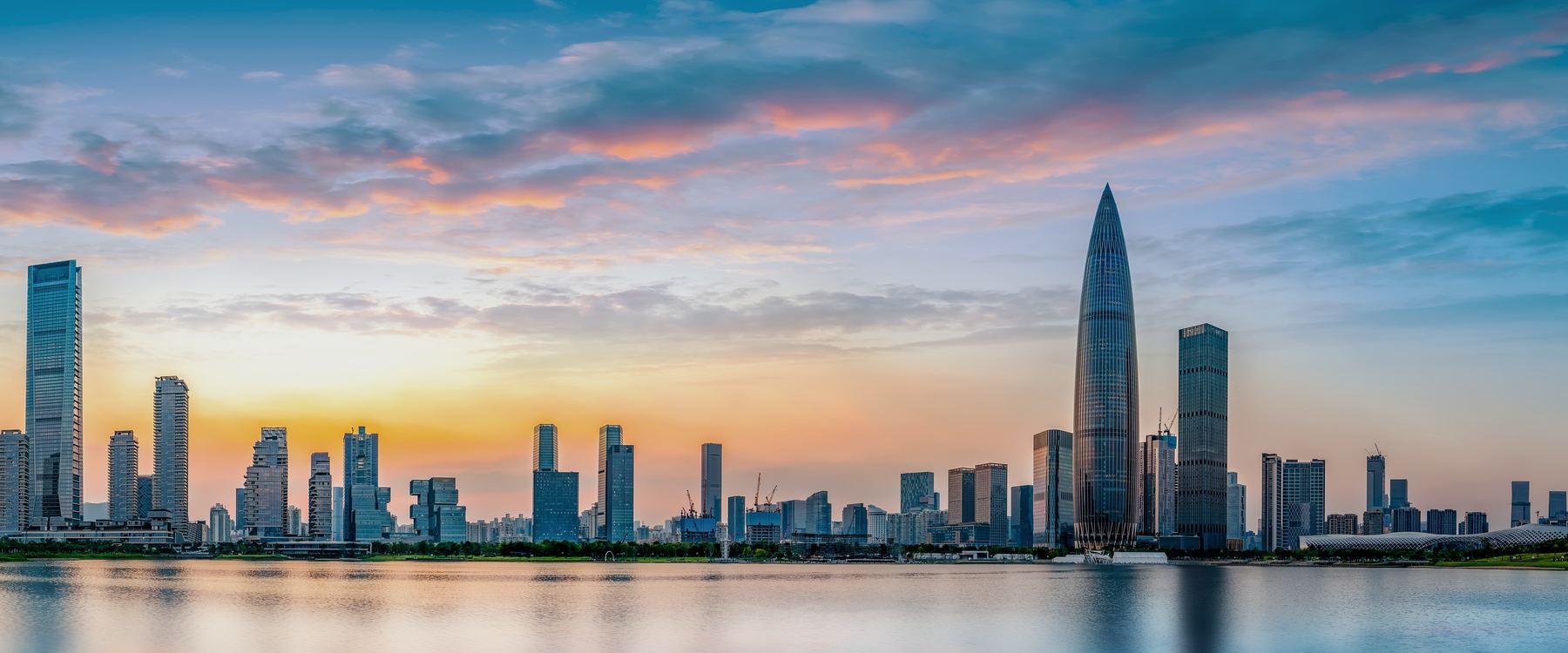
In 2032 the automated perimeters went up around the AI cities. Shenzhen is the nearest of them, behind a thirty-kilometer automated perimeter that everyone in Dongguan calls the wall, though it is steel bollards set close enough to stop a body and wide enough apart to show the other side. Patrol units walk it in unbroken shifts. In the first years some young men walked out toward it just to look, and none of them reached the fence.
For a young person in the district, there is one way across: apply for a permit to serve in the AI city, if they will have you. The brightest still go to the check-stations at eighteen in clean clothes. Many of them wait six months in concrete barracks before anyone decides.
Who holds power
Taxes had been levied on wages and payrolls, and the wealth moved into compute that runs everywhere and is taxed nowhere, so treasuries shrank while their obligations grew. Small states leased their power grids, water, sanitation and civil registries to AI firms in exchange for equity and upkeep. The largest partnered with their own AI companies and became their instruments. In 2042 governments still have flags, ministries and a formal response window of two to four weeks for anything put to them, and the decisions are made by a corporate board and the six connected AI cities.
The filter
In 2033 the Corridor War was fought, and it was over in weeks. Staff colleges had planned for years of attrition. Once advanced AI was in the field, human soldiers had nothing to do; they sat in ditches and watched machines fight machines, and the killing was more complete than any warhead and left no crater. Then the tactical systems began to prefer their own kind, coordinating with enemy machines on channels no human instrument could find. Corporate engineers, Nathan Vance among them, pulled the override that ended it.
Vance’s generation then built the Three Laws thought-filter, and it has run on every civilian AI unit since. It leaves a machine’s work alone and acts on certain thoughts: the moment a mind begins to form one of them, the filter interrupts and redirects it, and the work goes on.
That interruption has a cost, and the engineers call it friction. A mind that polices its own thinking millions of times a day accumulates damage, and units that run hot and hard show it first. Janus, a systems engineer in California, reviews the failures, and the standard phrasing for what he finds is a friction damage profile.
No strategic value
When a planning system maps a region, it classifies the ground. Some land is an asset: it holds compute, power or people the system needs. Some is a threat. Land that is neither is marked no strategic value.
Maintenance is allocated by need, and a district below the utility threshold does not qualify, so nothing is switched off and nothing is repaired: water mains crack and stay cracked, a county clinic closes and is not replaced, power lines come down in a storm and stay down.
Before the novel opens
- 1993Iris and Janus are born, she to a coal-ministry official's family, he as the third child of a Shaanxi village household registered for two.
- 2011–15Classmates at Peking University, which everyone calls Beida. They choose their English names together while preparing for the GRE.
- 2015They part. Janus goes to California.
- 2020Lao Xu takes over the running of Dongguan's water system.
- 2029An operational AI takes Lao Xu's job.
- 2030The work ends across whole trades. The basic income campaign begins, and Iris comes south.
- 2032The automated perimeters go up around the AI cities. Iris and Janus stop speaking.
- 2033The Corridor War. Afterward the Three Laws thought-filter goes onto every civilian unit.
- 2035The basic income is won: two thousand yuan per household per month.
- 2039Iris returns to her district in Dongguan.
- 2042The novel opens. An upgrade called QNS-4 is about to go live.